
Fox Trapping
Council is currently planning for the next round of fox trapping within Wildlife Protection Areas (WPAs) to support environmental conservation where other control methods are not feasible. Sites will include:
- Manly Warringah War Memorial Park (Manly Dam)
- Allenby Park, Brookvale
- Jamieson Reserve, Narrabeen
- Middle Creek Reserve, Narrabeen
- Forestville Park
Please ensure dogs are kept on a leash on formed paths where permitted and kept out of WPAs where prohibited.
Vertebrate Pest Control Program – Various Reserves
Council undertakes vertebrate pest shooting at various reserves where safe to do so and subject to strict security protocols. Operations will be undertaken between 10pm and 4am, excluding Friday to Sunday evenings, public holidays and school holidays. The purpose of the vertebrate pest control program is to protect native wildlife from vertebrate pests (foxes and rabbits) and fulfil Council's obligations under the NSW Biosecurity Act 2015.
The following reserves are included in Council’s current program:
- David Thomas Reserve, Manly Vale
- Passmore Reserve, Manly Vale
- Millers Reserve, Manly Vale
- Nolans Reserve, Manly Vale
- Warringah Golf Course, Manly Vale
- Wakehurst Golf Course, North Balgowlah
- Aquatic Reserve, Allambie Heights
- Allambie Oval, Allambie
- Forestville Park, Forestville
- Forestville Playing Fields, Forestville
- North Curl Curl Playing Fields and reserves adjoining North Curl Curl Lagoon west of Griffin Road (i.e. excluding beachside dunes)
- Governor Philip Park, Palm Beach
- Careel Bay Playing Fields, Careel Bay
- Avalon Golf Course, Avalon
- Avalon Beach Des Creagh Reserve (adj Surf club - excludes Avalon dunes)
- Porter Reserve, Newport
- North Mona Vale Headland, Mona Vale
- Mona Vale Basin Reserve, Mona Vale
- Kitchener Park, Mona Vale
Enquiries can be directed to the Invasive Species Team at invasivespecies@northernbeaches.nsw.gov.au.
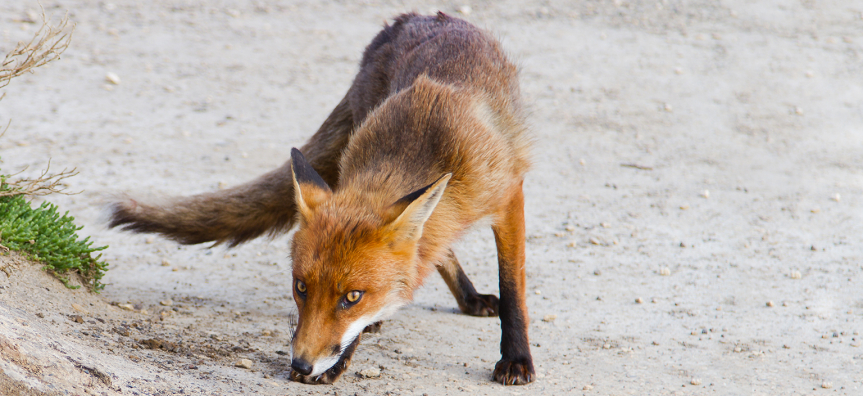
European Red Foxes were first introduced to Australia for recreational hunting in 1855. The spread of foxes across southern Australia in the late 1800s and early 1900s coincided with local extinctions of several species in our region, such as the Bettong, Greater Bilby, Numbat, Bridled Nail-tail Wallaby and Quokka. Northern Beaches Council is responsible for control programs in our parks and bushland but you can also help keep the fox population down.
Why are foxes a problem?
Foxes are highly opportunistic animals and have adapted extremely well to urban environments. They are skilled hunters and pose a significant threat to many native species, particularly ground‑nesting birds, lizards, and small to medium‑sized mammals such as the Swamp Wallaby, Ringtail Possum, Southern Brown Bandicoot, Long‑nosed Bandicoot and Little Penguin.
Foxes are also known to kill domestic animals, including rabbits, guinea pigs and chickens. In addition, they can carry diseases and parasites that may be transmitted to dogs. Their feeding habits can also contribute to the spread of weed species.
How are foxes controlled?
The fox control program aims to protect native and domestic animals. Foxes are controlled by targeted shooting, trapping, den fumigation and fencing. Due to safety and legal requirements, there may be limitations on which techniques are able to be used to effectively control foxes in our residential areas, parks and reserves. Where targeted shooting programs are undertaken, Council engages specialist professional contractors that follow detailed safety protocols. For further information on control programs contact Northern Beaches Council.
Reporting fox sightings
Fox sightings, signs of fox activity, den locations and attacks on native or domestic animals can be reported into FoxScan. FoxScan is a free resource for residents, community groups, local Councils, and other land managers to record and report fox sightings and control activities. Council's Invasive species Team receives an alert when an entry is made into FoxScan. The information in FoxScan will assist with planning fox control activities and to notify the community when and where foxes are active.
What can you do?
There are a number of steps you can take to assist to reduce fox problems. Never feed foxes or leave food scraps or pet food outside overnight. Keep bin lids closed and use enclosed compost bins. Ensure chicken coops and rabbit hutches are fox-proof and secure animals overnight. Prevent access to the underneath of buildings. Remove weeds that provide food and shelter, such as blackberries, and collect fallen fruit around fruit trees. Join a volunteer Bushcare group and help protect the habitat of native animals at risk from foxes.
Sydney North Vertebrate Pest Committee
Sydney North Vertebrate Pest Committee was established in 1998. The group comprises key land managers from across the Sydney North Region including 11 local government agencies, National Parks and Wildlife, Local Land Services, Forestry NSW, Sydney Water, Taronga Zoo and Sydney Harbour Federation Trust. The aim of the group is to share information, raise awareness, educate agency members and the community and develops the skill required to manage feral animals including foxes.
Foxes and the law
Predation by the European Red Fox is listed as a key threatening process under the Commonwealth Environment Protection and Biodiversity Conservation Act 1999 and the NSW Biodiversity Conservation Act 2016.
Under the NSW Biosecurity Act 2015 pest animals are any species (other than native species) that present a biosecurity threat. The Greater Sydney Regional Strategic Pest Animal Plan identifies foxes as a biosecurity threat in our region and outlines actions land managers can take to minimise their risk and impacts.
The Australian Government, in consultation with the states and territories, has developed the Threat Abatement Plan for Predation by the European Red Fox.
Find out more about foxes from the Department of Primary Industries & Regional Development.